

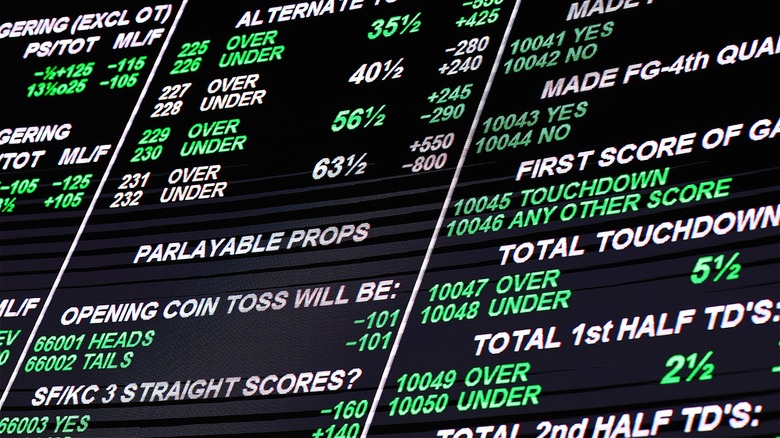
To a new bettor, the numbers next to a team’s name can look like a complex code. What does -110 mean? Why is one team +150?
Understanding these numbers, known as “American Odds,” is the most fundamental skill in sports betting. The good news is, it’s very simple once you know what to look for. All odds are based on the concept of betting $100.
Here’s the A2Z breakdown of what the `+` and `-` signs really mean.
The Favorite: The Minus Sign (-)
When you see a minus sign, you are looking at the **favorite**. The number tells you **how much you must bet to win $100.**
- Example: Chiefs -150
- This means: You must risk $150 to win $100 in profit. (If they win, you get back $250 total: your $150 stake + $100 profit).
Think of the minus sign as what you must “give” the sportsbook to win $100.
The Underdog: The Plus Sign (+)
When you see a plus sign, you are looking at the **underdog**. The number tells you **how much you will win for every $100 you bet.**
- Example: Raiders +130
- This means: A $100 bet will win you $130 in profit. (If they win, you get back $230 total: your $100 stake + $130 profit).
Think of the plus sign as the “bonus” you get for taking on the extra risk of betting on the underdog.
FINDING THE VALUE IN THE ODDS
Finding a winner is only half the battle. The other half is finding value—knowing when the odds are in your favor. Our AI models analyze thousands of data points to find the highest-value plays on the board every day.
What About -110?
You will see `-110` on almost every single **point spread** (e.g., Chiefs -6.5) and **total** (e.g., Over 52.5). This is the standard “price” or “juice” (the sportsbook’s built-in commission).
It means you have to bet $110 to win $100, regardless of which side you take. This “10% tax” is how sportsbooks guarantee they make money in the long run.
Understanding odds is the first step. The next is having a system to know which odds are worth taking. That’s where we come in.



Leave a Reply